
 Log In
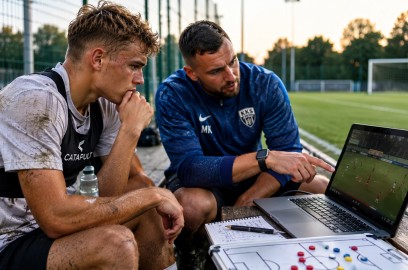
Every footballer has weaknesses. Even the best professionals in the world.
The difference is that successful players recognise their weaknesses and work to improve them.
If you dream of becoming a professional footballer, you must understand what is holding you back.
Here are 7 practical tips to help you identify and improve your weaknesses.
1. ANALYSE YOUR MATCH PERFORMANCES
Do not judge your performance only by goals, assists or the final result.
Pay attention to situations where you lose possession, make poor decisions or struggle against opponents.
YOUR ACTION: After every match, write down three situations where you could have performed better.
2. ASK FOR HONEST FEEDBACK
Sometimes other people notice weaknesses that you cannot see yourself.
Your coach may identify problems with your positioning, decision-making or technical abilities.
YOUR ACTION: Ask your coach one simple question: "What are the three biggest weaknesses preventing me from playing at a higher level?"
3. WATCH YOURSELF ON VIDEO
Watching your own matches can reveal mistakes you never noticed during the game.
You may discover poor positioning, slow reactions or missed passing opportunities.
YOUR ACTION: Review 15 minutes of your match footage. Identify five situations you could have handled differently.
4. COMPARE YOURSELF WITH BETTER PLAYERS
Being one of the best players in your current team does not mean you are ready for professional football.
YOUR ACTION: Watch players in your position competing one or two levels above you. Compare their speed of decision-making, movement and technical execution with yours.
5. PRIORITISE YOUR BIGGEST WEAKNESSES
Trying to improve everything at once can make your training ineffective.
Some weaknesses also have a greater impact on your performances than others.
YOUR ACTION: Choose two weaknesses that most frequently affect your matches. Focus on improving them over the next four weeks.
6. CREATE SPECIFIC TRAINING EXERCISES
Knowing your weaknesses is useless if you do nothing about them.
If your first touch is poor, practise receiving passes from different angles.
If your weaker foot limits you, practise passing and finishing with it.
YOUR ACTION: Add two focused 15–20-minute sessions to your weekly routine, when your training load and recovery allow.
7. MEASURE YOUR IMPROVEMENT
Many players believe they are improving without checking their actual progress.
YOUR ACTION: Track simple results. For example, count successful passes with your weaker foot out of 20 attempts, or review how often you lose possession under pressure during matches.
Repeat your assessment every two weeks.
FINAL MESSAGE
Your weaknesses do not make you a bad footballer.
Ignoring them can prevent you from reaching a higher level.
Professional clubs look for players who can meet the technical, tactical, physical and mental demands of their competitions.
You cannot expect to reach that level by practising only what you already do well.
Identify your weaknesses. Build a plan. Work consistently. Measure your progress.
REMEMBER: YOUR BIGGEST WEAKNESS TODAY COULD BECOME ONE OF YOUR GREATEST STRENGTHS TOMORROW — IF YOU START WORKING ON IT.
SUPPORT FOR PLAYERS
For 6 years, we have been helping less-known players completely for free, completing over 25 transfers to European clubs.
If you value our work, you can support Football Talents Tube.
Supporters can speak with me personally, receive honest feedback and individual guidance. The most determined players receive invitations for official trials.