
 Log In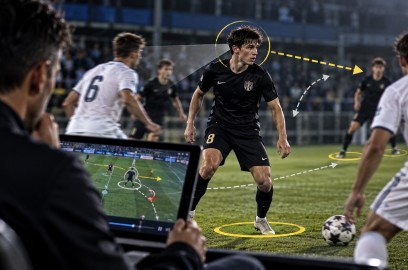
Imagine a scout watching your match.
You haven't touched the ball yet.
You haven't made a pass, taken a shot or won a tackle.
But the scout can already see important things about your game.
Why?
Because football is not only about what you do WITH the ball.
It's also about what you do BEFORE you receive it.
Many young players spend hundreds of hours improving their technique but pay very little attention to their behaviour without the ball.
Here are 7 things a coach or scout can notice — and how you can improve them.
-
HOW OFTEN DO YOU LOOK AROUND?
Watch yourself during a match.
Before the ball reaches you, do you check what's happening around you?
Or do you only look at the player with the ball?
Good players constantly collect information.
They look for opponents, teammates and available space.
YOUR TASK:
Ask someone to record 10 minutes of your match.
Count how many times you look around before receiving the ball.
Then work on checking your surroundings more often, especially when the situation changes.
-
ARE YOU ALREADY THINKING ABOUT YOUR NEXT ACTION?
Some players start thinking only after receiving the ball.
Others already know their options.
Watch what happens before you receive a pass.
Do you move into a useful position?
Do you prepare your body to play forward?
Do you recognise where the pressure is coming from?
YOUR TASK:
During your next training session, try to identify two possible passing options before receiving the ball.
You will begin making decisions earlier.
-
WHAT DOES YOUR BODY LANGUAGE SAY?
Imagine two players losing possession.
The first lowers his head and complains.
The second immediately reacts and tries to recover the ball.
Which player looks more reliable?
Your body language does not tell the whole story, but repeated reactions can reveal important habits.
YOUR TASK:
Watch your reactions after mistakes.
Do you complain, stop running or blame teammates?
Work on reacting positively and returning your attention to the next action.
-
DO YOU MOVE WHEN YOU ARE NOT RECEIVING THE BALL?
Many players become active only when they expect a pass.
But intelligent movement can help your team even when you never touch the ball.
You can create space for a teammate.
Pull a defender away.
Offer a passing option.
Or position yourself to stop a counterattack.
YOUR TASK:
Watch five minutes of your match and focus only on your movement without the ball.
Ask yourself:
Did my movement help the team?
Or was I simply waiting?
-
HOW DO YOU REACT WHEN YOUR TEAM LOSES THE BALL?
This is one of the most important moments in football.
Your team loses possession.
What happens next?
Do you immediately press when appropriate?
Do you return to your defensive position?
Do you recognise the most dangerous opponent?
Or do you stand still?
YOUR TASK:
Find five moments when your team lost the ball.
Watch your first three seconds after each loss.
Evaluate whether your reaction helped the team defend.
-
DO YOU COMMUNICATE WITH YOUR TEAMMATES?
Communication is not about shouting all the time.
It's about giving useful information.
"Man on!"
"Turn!"
"Time!"
"Behind you!"
Good communication can help teammates make better decisions.
YOUR TASK:
During your next match, focus on giving clear, useful information.
Avoid unnecessary shouting.
Make your communication help someone.
-
ARE YOU READY BEFORE THE BALL COMES TO YOU?
This is where many young players lose valuable time.
They stand with their feet in the wrong position.
They don't check their surroundings.
They react too late.
And when the ball finally arrives, they are already under pressure.
YOUR TASK:
Watch yourself just before receiving five passes.
Check your body position, movement and awareness.
Could you have prepared better?
Then practise receiving passes with your body positioned to protect the ball or play into available space.
FINAL MESSAGE
Here is a simple challenge.
Record your next match.
Choose any 10-second period when you don't touch the ball.
Watch it carefully.
What can you see?
Are you scanning?
Are you moving intelligently?
Are you communicating?
Are you preparing for the next action?
Now repeat this test several times during the match.
A single 10-second clip cannot tell a scout everything about your ability.
But repeated habits across an entire match can reveal a lot about your football intelligence.
Remember:
THE BALL DOESN'T NEED TO BE AT YOUR FEET FOR YOU TO SHOW YOUR QUALITY.
Sometimes the difference between an average player and a very good player begins before the first touch.
STOP WAITING FOR THE BALL TO START PLAYING FOOTBALL.
START PLAYING BEFORE IT REACHES YOU.
SUPPORT FOR PLAYERS
For 6 years, we have been helping less-known players completely for free — guiding them, giving honest feedback, and creating real football opportunities. During this time, we have completed over 25 player transfers to clubs across Europe.
If you value our work and want to help us continue supporting players worldwide, you can support us through Football Talents Tube.
Every supporter will have the chance to speak personally with me.
I will check your level, give you real feedback, and guide you individually.
The most determined players receive invitations for official trials.